

The Foreign Account Tax Compliance Act (FATCA) has fundamentally reshaped the financial landscape for U.S. citizens living overseas. What began as a tool to curb offshore tax evasion has evolved into a global web of automated data sharing. In today's "post-FATCA" world, tax transparency is the default, and compliance is a prerequisite for maintaining international banking access.
Executive Summary: What is FATCA and how does it impact US citizens living in Europe?
FATCA requires European banks to report the financial data of U.S. citizens to the IRS, leading to increased transparency and occasional banking "lockouts" where local banks deny services to Americans. Citizens must self-report foreign assets on Form 8938 if they meet high thresholds (typically starting at $200,000 for expats) and file an FBAR if their total foreign balances exceed $10,000. In 2026, ongoing legal challenges regarding GDPR and data privacy continue to shape how this information is shared between the EU and the U.S.
FATCA in 2026: A Comprehensive Guide for Americans Living in Europe
In the modern financial era, transparency is the global standard. For U.S. citizens living abroad, the Foreign Account Tax Compliance Act (FATCA) is the most significant regulatory framework governing their international financial life. Whether you are a long-term expat or a recent arrival in the European Union, understanding the mechanics of FATCA is essential for maintaining both U.S. tax compliance and local banking access.
What is FATCA?
The Foreign Account Tax Compliance Act (FATCA) was enacted in 2010 to combat tax evasion by U.S. persons holding investments in offshore accounts. In 2026, FATCA operates through a vast network of Intergovernmental Agreements (IGAs). These agreements compel Foreign Financial Institutions (FFIs)—including banks, insurance companies, and investment funds—to report the account details of U.S. citizens directly to the IRS.
What Does FATCA Require U.S. Citizens to Do?
While FATCA places a heavy reporting burden on banks, it also creates direct filing requirements for individuals. Failure to meet these requirements can result in severe financial penalties, even if no tax is actually owed.
1. File Form 8938
If your total "specified foreign financial assets" exceed certain thresholds, you must attach Form 8938 to your annual tax return. For U.S. citizens living abroad in 2026, the standard thresholds are:
Single Filers: $200,000 on the last day of the year or $300,000 at any point during the year.
Married Filing Jointly: $400,000 on the last day of the year or $600,000 at any point during the year.
For more details on what constitutes a "specified asset," refer to the official IRS instructions for Form 8938.
2. Coordinate with FBAR (FinCEN Form 114)
Though separate from FATCA, the Report of Foreign Bank and Financial Accounts (FBAR) is its essential counterpart. You must file an FBAR if the aggregate value of all foreign financial accounts exceeds $10,000 at any time during the calendar year. You can find the electronic filing portal and current regulations at the FinCEN official website.
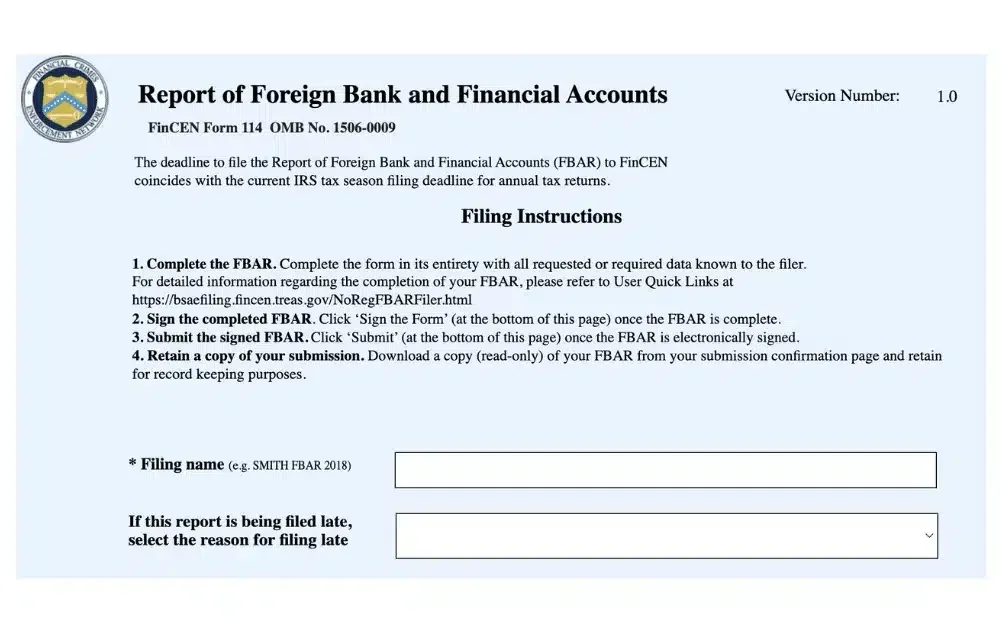
Fincen form 114 used to report foreign bank accounts to the IRS.
How FATCA Specifically Affects Americans in Europe
Living in Europe presents unique challenges due to the intersection of U.S. law and the European Union’s strict privacy and banking standards.
The "Banking Lockout" Phenomenon
Because the administrative cost of FATCA compliance is high, many smaller European banks refuse to open accounts for U.S. citizens. This "financial lockout" can make obtaining a mortgage, opening a business account, or even securing a simple debit card difficult in certain jurisdictions.
GDPR vs. FATCA
In 2026, the tension between the General Data Protection Regulation (GDPR) and FATCA remains a hot-button legal issue. EU privacy laws generally restrict the mass transfer of personal data to third countries, yet FATCA mandates it. Many "Accidental Americans"—individuals who acquired U.S. citizenship by birth but have no other ties to the U.S.—have used European courts to challenge these transfers. For the latest on these legal developments, the European Data Protection Board provides updates on international data transfer rulings.
Investment Restrictions (PFICs)
Most European mutual funds and ETFs are classified by the IRS as Passive Foreign Investment Companies (PFICs). Under FATCA’s transparent reporting, the IRS easily identifies these holdings, which are subject to punitive tax rates. Consequently, many Americans in Europe choose to maintain U.S.-based brokerage accounts to avoid these tax traps.
Managing Compliance: Expert Tips for 2026
Navigating FATCA requires a proactive strategy. Use these high-authority resources to stay ahead of your obligations:
Audit Your Accounts Annually: Currency fluctuations can push you over a reporting threshold even if your balance hasn't changed. Check the Treasury’s official exchange rates to ensure your conversions are accurate.
Utilize Streamlined Procedures: If you have recently discovered you are behind on filings, the IRS offers Streamlined Filing Compliance Procedures to help non-willful taxpayers catch up without massive penalties.
Understand Totalization: To ensure you aren't paying social security taxes to two countries while your data is being shared, review the Social Security Administration’s list of International Agreements.